Prevention in IEL
Perhaps most important principle in IEL, IEL is all about preventing environmental harms and thus this is at its very core.
Origins
Trails smelter case of 1941
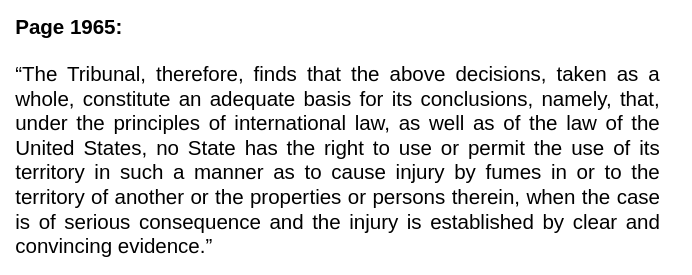 Said already that no harm was a principle part of customary law and this is the origin of prevention. There wasn’t autonomisation though, not a whole principle but reduced to no harm principle.
The Corfu Chanel Case of 1949
Even if later with lake lanoux there were doubts about the no harm principle here not so much. UK vs. Albania, not an environmental case per se.
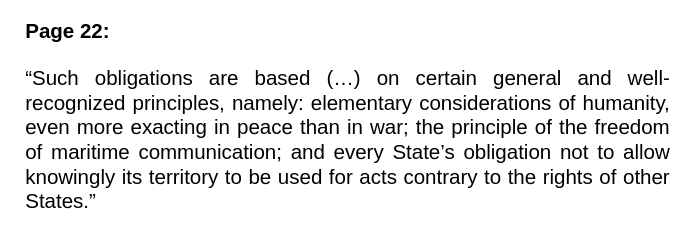 However, recognises the customary status of the no harm principles and says as we saw in Session 2, 3-Emergence internationally that is it part of the elementary considerations of humanity.
In the same spirit that the trails smelter tribunal where no one really knows where the principle came from in customary law, but in this case having a retrospective reading they maybe got it from there or somewhere else.
It isn’t surprising that no harm was here since the beginning and the international community was for it because the very original reason of being of IEL was this. As such there was no hesitation by states in codifying it through soft law once IEL was born.
Stockholm
Until the 1980s, no autonomy (end of the decade or even early 90s, no focus on prevention but on no harm). It gets sophisticated with Rio whereas in Stockholm it’s still just part of no harm.
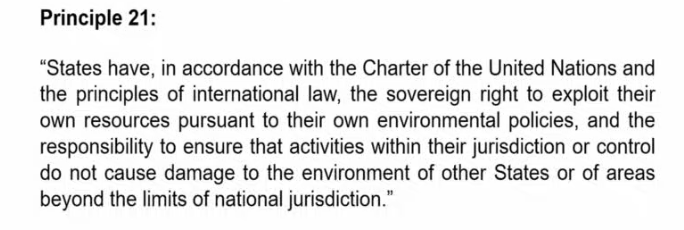
Rio
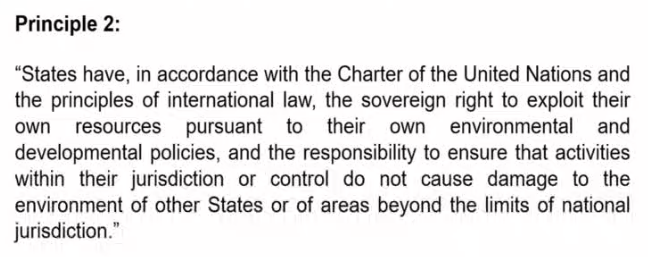 Indeed we reiterate no harm but we also autonomise prevention as a principle, sophisticated.
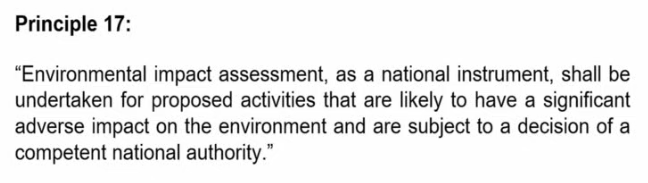 It shows that by the early 1990s prevention had evolved beyond the scope of no harm. Here we don’t talk about no harm but states having a positive duty to conduct EIAs before conducting activities. This is more about environmental risks, but a positive dimension of prevention.
Evolution
How we went from a negative dimension (don’t do) to a positive one (do conserve, protect, etc…). No harm was, after all, about negative measures.
United Nations Convention on the Law of the Sea of 1982 (UNCLOS)
 Here is were the legal development towards positivity starts, Rio didn’t come from nowhere with this dimension. Contemporaneous IEL legal trends got reflected, indeed UNCLOS belongs to them.
And it went, as we can see, for something more positive than no harm→obligation to protect and preserve. Rio cristallises the existing development, it explains the sophisticated approach.
Convention on the Law of the Non-Navigational Uses of International Watercourses of 1997
But this continued in the same direction, confirming the cristallisation in Rio→autonomisation.
 This convention does include no harm and this provision to deal with the positive dimension of prevention→proactive measure for protection of ecosystems. We go beyond and separate explicitly.
Indeed this forms part of a trend but does it mean that it got into customary law at the same pace? This convention took until 2014 to enter into force, and states like India or Egypt are still very doubtful about the customary content of this text. The international law commission worked for more than a decade on the application of custom to international water courses therefore should be reflective of customary law. Most of what was put there should be, however doesn’t fully answer this problematic.
Danube dispute
But 1997 was also the year of the very first sustainable development dispute ever, the Danube project, as we saw in Session 5-The sustainable development principle?.
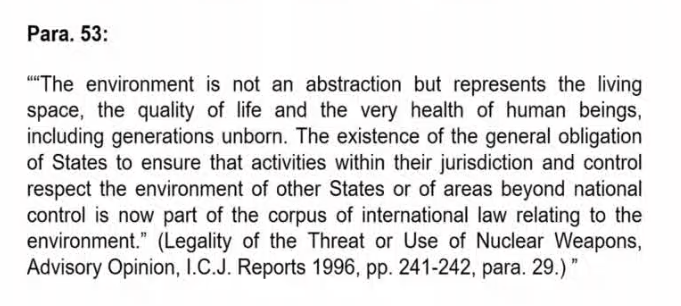 The award recognises this evolution as clear (as well as intergenerational equity as we can see). But the important part is that it says that there is an existence of an obligation that states ensure that their activities in their jurisdiction and control respect the environment wherever. It’s very similar to no harm but it’s positive, it’s not about not causing damage but ensuring respect of the environment.
It doesn’t say how to perceive this shift to the positive dimension, kind of leaves it in an emerging situation. It does quote the ILC but doesn’t say what it says, that this is customary law.
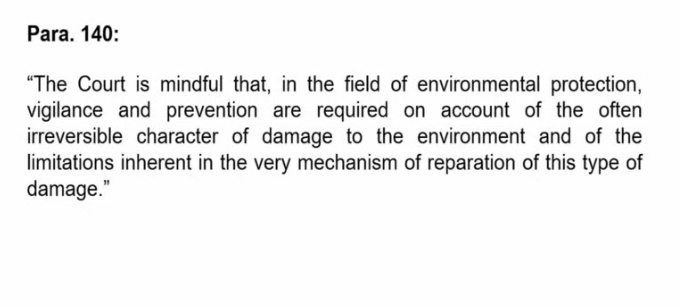 There is autonomisation, even by referring to prevention as a thing in of itself. Again proactive, even though no mention of precaution despite Hungary invoking it in this case→termination of the treaty on a precaution basis. Mindfulness of what is required as being prevention as vigilance.
We can see the consequences of the shift to autonomous positiveness.
International Law Commission : Draft Articles on the Prevention of Transboundary Harm from Hazardous Activities of 2001
Draft articles on prevention for customary law! Lot of states were against this saying it was beyond custom though.
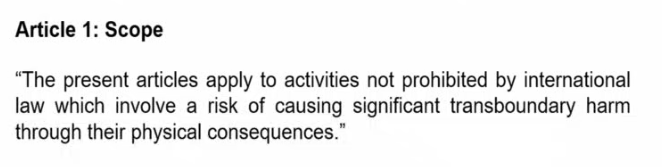 A risk has to be anticipated, basically what prevention is about.
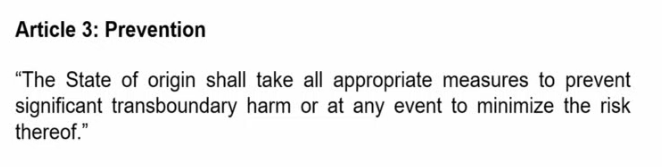 Positive dimension, taking appropriate measures to prevent.
The ILC stopped the work because of the state-led attacks against this draft however.
Award in the Arbitration regarding the Iron Rhine
Is there a link between sustainable development and prevention? This tribunal did make one.
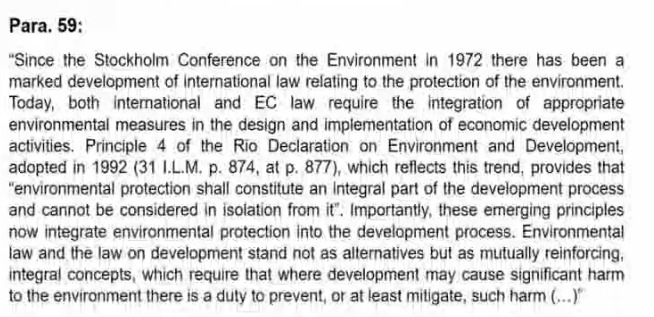 Economic development requires for the planning for environmental protection in the cadre of sustainable development, so a positive approach. The link is there→anticipating measures of environmental protection. Requirement to prevent or mitigate harm to the environment where development may cause it.
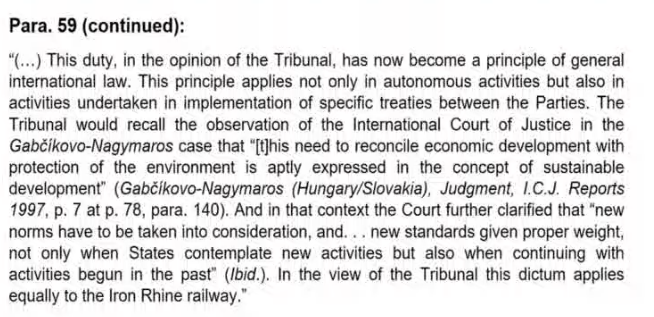 Less timidity than the court, it explicitly says principle of general international law citing the previous more timid case.
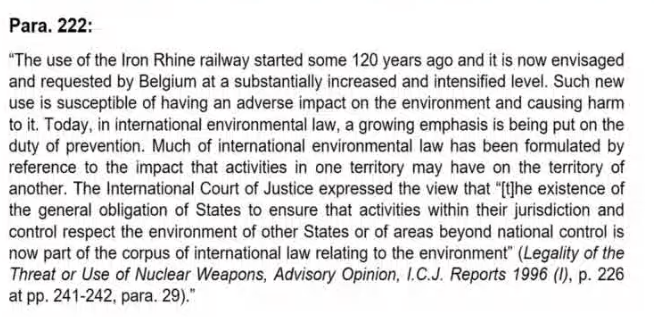 Special emphasis on the duty of prevention autonomously. And then it says that was basically what the court for the danube dispute wanted to say.
Pulp Mills on the River Urugay of 2010
Argentine vs. Uruguay, explains how to apply the principle of prevention. Argentina learned that Uruguay had gotten Spanish companies to do pulp mills on this international river. Basically the dispute was about whether Uruguay complied with the principle of prevention before authorising the mills.
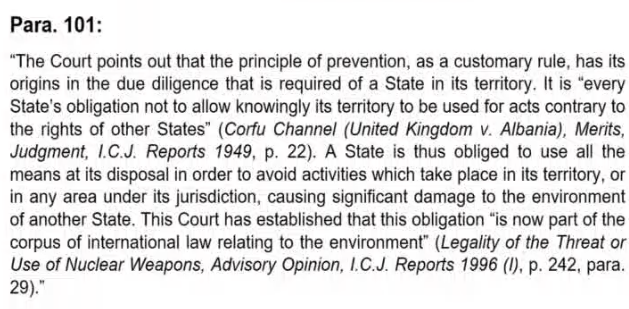 Concept of prevention is about due diligence in their territory by states towards the territory of another one. Basically gives a definition which is very positive and similar to no harm, use all the means at disposal to… This however implies that states only have the obligation to do their best, under customary law. It’s not really to avoid harm and then turning the causation of it into a violation but just that states harm because of a lack of due diligence. If all the required diligence has been exercised and harm is caused then well everything is cool.
So?
Not result but efforts. Variable geometry, USA and Argentina don’t have the same diligence as they dont have the same means (cash, human resources, etc.). But what are the best means to prove a state has complied?
- Cooperation→inform others about the project, see their views.
- Adoption and enforcement of environmental legislation, as in many countries the legislation is to be implemented despite its idealness.
- Both towards public and private operators under the territory of a state. The ICJ even said this in 2025 in an advisory ruling.
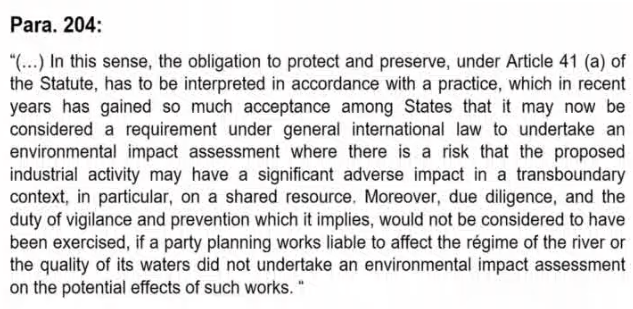
- Third is the requirement to conduct an EIA before green-lighting a project, whether done privately or publicly for a private or public project that can have risks.
- Says it is customary (very clear!! doesn’t say general or whatever, says customary) and thus required because of acceptance by state practice, no state can say that it’s their choice. The flexibility rests on how to do it, not whether to.
- Says it is customary (very clear!! doesn’t say general or whatever, says customary) and thus required because of acceptance by state practice, no state can say that it’s their choice. The flexibility rests on how to do it, not whether to.
- Third is the requirement to conduct an EIA before green-lighting a project, whether done privately or publicly for a private or public project that can have risks.
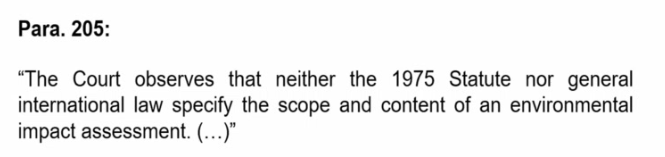
Certain Activities Carried Out by Nicaragua in the Border Area of 2015
In this case NIC complains about lack of EIA from CR, and CR says it was exempted in case of emergencies by domestic law. And the court said no way, you can regulate how to but not exempt yourself from doing it, because it’s customary.